
Burnout and the Collapse of Executive Energy Systems
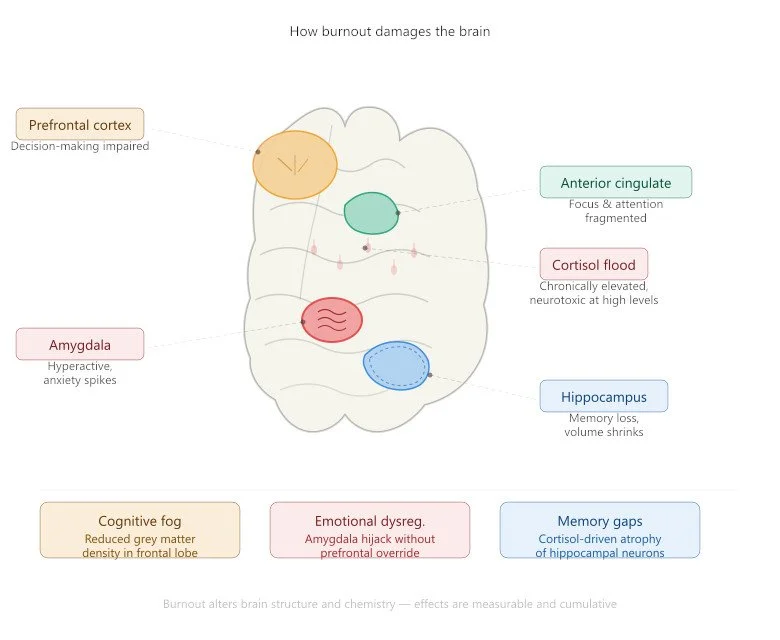
Burnout has become one of the defining challenges of modern leadership.
Across industries, business owners, founders, entrepreneurs and executives report unprecedented levels of exhaustion, cognitive overload, and declining motivation.
While burnout is often described as emotional exhaustion or workplace fatigue, the reality is far more complex.
Burnout represents a biological collapse of the systems responsible for producing and regulating energy.
Understanding these biological mechanisms is essential for leaders who want to recover and rebuild sustainable performance.
What Burnout Really Is
Burnout occurs when the body’s stress-response systems remain activated for prolonged periods.
Over time, this constant activation disrupts multiple physiological systems.
Burnout affects:
• hormonal balance
• nervous system regulation
• mitochondrial function
• immune activity
• metabolic stability
When these systems break down, the body can no longer maintain the energy required for high-level performance.
The Brain Under Chronic Stress
The brain is particularly vulnerable to chronic stress.
When stress hormones remain elevated for long periods, several changes occur:
• reduced neurotransmitter balance
• impaired memory formation
• diminished focus
• increased emotional reactivity
Leaders may find themselves struggling with decisions that previously felt effortless.
The Nervous System and Burnout
The autonomic nervous system regulates the balance between activity and recovery.
Two key branches control this system:
• sympathetic (fight or flight)
• parasympathetic (rest and recovery)
Chronic stress pushes the nervous system into prolonged sympathetic dominance.
This prevents the body from entering restorative states.
Without adequate recovery, energy systems deteriorate.
The Hormonal Cascade
Burnout also affects hormonal regulation.
Elevated cortisol disrupts:
• sleep cycles
• appetite regulation
• blood glucose control
• immune balance
These hormonal shifts contribute to fatigue, weight gain, and mood instability.
Mitochondrial Decline
Mitochondria produce cellular energy.
Stress, inflammation, and nutrient deficiencies can damage mitochondrial function.
When mitochondrial efficiency declines, the body produces less energy.
This leads to persistent fatigue even when individuals attempt to rest.
Cognitive Consequences
Burnout significantly impacts cognitive performance.
Leaders may experience:
• reduced strategic thinking
• mental fatigue
• decreased creativity
• slower information processing
These changes can influence business decisions and organizational outcomes.
Recovery Requires Biological Restoration
Recovering from burnout requires more than time off.
Leaders must restore the biological systems that generate energy.
Key areas include:
• sleep restoration
• stress regulation
• metabolic balance
• mitochondrial recovery
With targeted interventions, energy systems can recover.